OMO vs O2O, comparing apples to golden apples
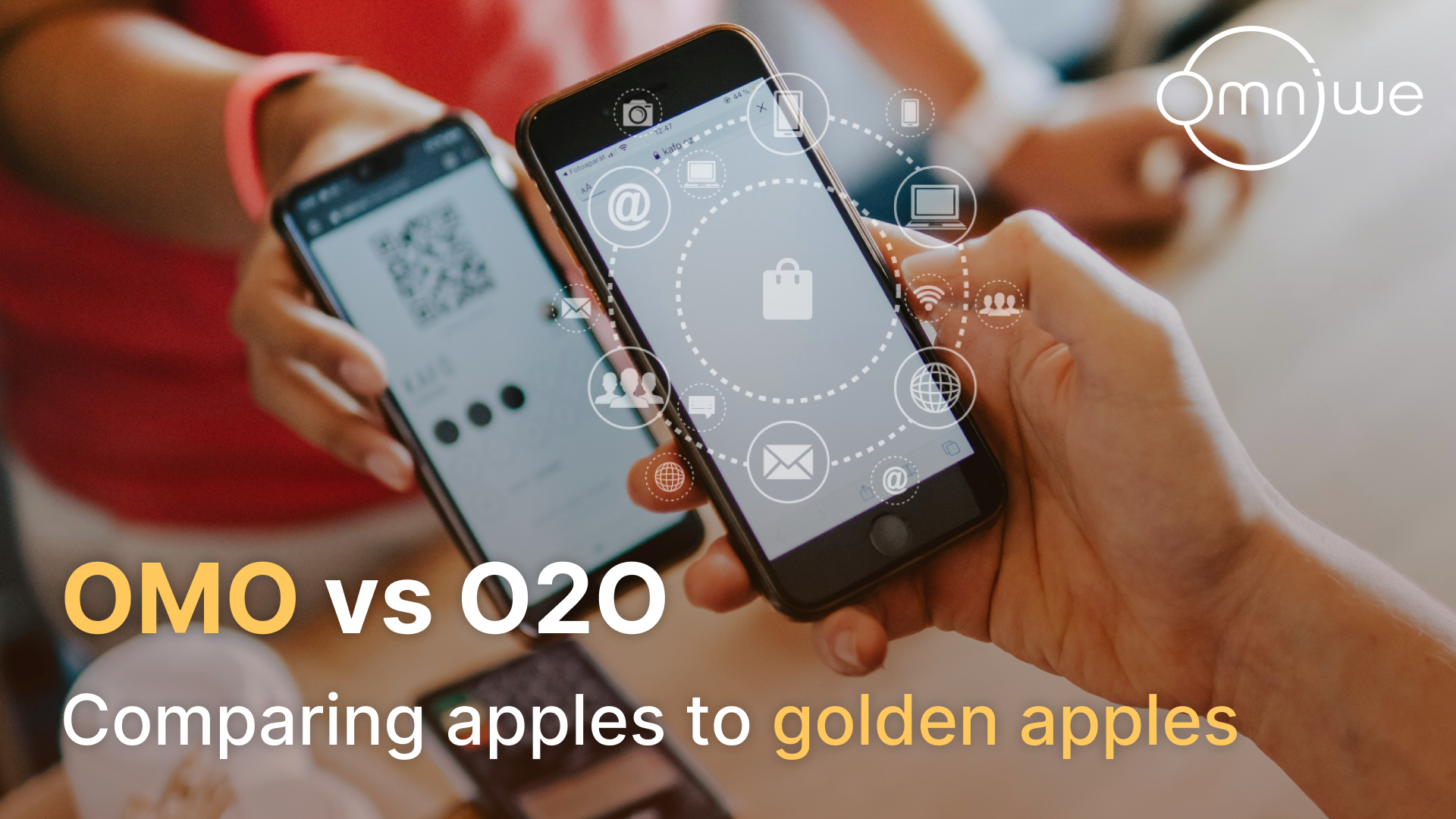
Navigating the retail landscape requires understanding the nuances of the digital economy, such as the O2O (Online-to-Offline) meaning and its many utilization, a strategic approach where online initiatives drive footfall to physical storefront. Meanwhile, OMO (Online-meets-Offline), converging the realms of digital and physical commerce, creates a unified retail ecosystem that enriches customer experiences. This integrated model is fundamental in today's multi-channel marketing, embodying seamless transitions between ecommerce platforms and brick-and-mortar stores.
As the retail industry evolves, it leans towards innovative frameworks like OMO and O2O strategies, promising to redefine online to offline marketing and the management of customer journeys. In the following sections, we will compare these two models and identifying the distinctive differences between the two terminology, explore the features of OMO cloud management platforms, and look at the future trajectory of retail management strategies.
Understanding OMO (Online Merge Offline)
OMO, or Online Merge Offline, is a comprehensive strategy that aims to create a seamless shopping experience by integrating online and offline channels. Here are some key aspects of OMO and how it functions in retail management:
-
Data Integration Across Channels:
-
OMO focuses on the integration and synchronization of consumer information, whether the shopping occurs online or in physical stores.
-
The strategy bridges the information gap between online and offline channels, collecting and utilizing customer data to enhance the shopping experience.
-
By consolidating customer profiles from both channels, OMO provides better analytics and insights, addressing the challenge of fragmented data.
-
Consumer Behavior and Engagement:
-
It collects consumer behavior footprints, with a central focus on people, to achieve accurate analysis and effective marketing strategies.
-
OMO in chat enables businesses to engage with customers in real-time, provide tailored recommendations based on preferences and purchase history, and collect valuable customer data.
-
The OMO model enhances precision targeting and builds a better shopping experience across all channels, leading to increased customer engagement and conversions.
-
Holistic Customer Experience:
-
OMO adopts a holistic approach that addresses every aspect of the customer's experience, whether it occurs online or offline.
-
OMO integrated businesses seeks to establish a cohesive, interactive shopping environment where the lines between online and offline are seamlessly blended.
-
Customers can experience products in-store, place orders online, and choose delivery or pick-up at the store, providing a personalized shopping journey.
The OmniWe management platform offers comprehensive solutions that facilitate the adoption of the OMO model, enabling real-time inventory management, omnichannel marketing, and a unified checkout process.
The effectiveness of OMO is evident in customer behavior, with OMO members who purchase both online and offline showing significantly higher annual purchase frequencies compared to those who shop through a single channel. To maximize the benefits of OMO, brands should ensure consistency in member identification across channels, create incentives for cross-channel revisits, and utilize data to meet consumer needs by segmenting members based on various factors like product preferences and shopping intentions.
Comparative Analysis: O2O vs. OMO
-
O2O (Online to Offline) Approach:
-
Digital to Physical Transition: O2O strategies focus on guiding consumers from an online environment to an offline one. This could involve online marketing leading to in-store purchases or online orders with brick-and-mortar store pickups.
-
Impact of Social E-commerce: The rise of social e-commerce and omni-channel platforms, especially during the Covid-19 pandemic, has shown the importance of digital channels in driving retail traffic to physical stores.
-
OMO (Online Merge Offline) Strategy:
-
Data-Driven Consumer Growth: OMO emphasizes a seamless integration of online and offline channels, utilizing data analytics to understand consumer behavior and drive growth. By connecting online and offline data, OMO enables brands to interact more effectively and holistically with consumers and make precise marketing decisions.
-
Enhanced Shopping Experience: Through strategies like chat commerce, OMO provides a personalized shopping experience. This includes real-time assistance and the convenience of shopping across multiple channels with a unified approach.
-
Technology Integration: Mini-programs like WeChat Mini-Program are becoming increasingly popular in OMO strategies, allowing brands to efficiently reach a broader audience and engage with them in a more interactive manner.
-
Direct Comparison:
-
Marketing Focus: O2O primarily drives consumers from online activities to offline operations, while OMO creates a more holistic experience by merging the two spheres [4].
-
Consumer Engagement: OMO's integration of chat functions not only personalizes the experience but also increases message open rates and customer engagement, which is a step beyond the traditional O2O approach [2].
-
Data Utilization: OMO strategies use integrated data to provide a complete view of the customer journey, enabling precise analysis and targeted marketing efforts, a feature that is less emphasized in traditional O2O models.
Key Differences Between OMO and O2O
Approach
O2O platforms primarily focus on connecting the online and offline channels of a retail business. They aim to drive online traffic and conversions to physical stores or offline services. O2O platforms often involve online marketing, digital promotions, and incentives to attract customers to offline locations.
OMO platforms, on the other hand, go beyond connecting online and offline channels. They aim to seamlessly integrate the online and offline experiences, providing a cohesive and unified customer journey. OMO platforms leverage technology to bridge the gap between online and offline touchpoints, creating a holistic and consistent customer experience.
Customer journey
O2O platforms typically focus on driving online traffic to physical stores or offline services. They prioritize online conversions and encourage customers to visit brick-and-mortar locations for purchases or experiences.
OMO platforms aim to create a seamless customer journey that blends online and offline interactions. They enable customers to browse, research, purchase, and receive services across multiple channels, allowing for flexibility and convenience.
Technology Integration
O2O platforms often rely on digital marketing, mobile apps, online advertising, and e-commerce platforms to drive online engagement and encourage offline visits. The focus is on utilizing online channels to promote offline activities.
OMO platforms utilize various technologies, such as cloud-based apps, IoT devices, and personalized recommendations, to create an integrated and personalized customer experience. They leverage data and analytics to deliver relevant and tailored experiences across online and offline touchpoints.
Practicality and Application
O2O platforms are practical for businesses that have physical stores or offer offline services and want to leverage online channels to drive foot traffic and conversions. They allow businesses to track online-to-offline conversions and measure the impact of digital marketing efforts on offline sales.
OMO platforms are practical for businesses that aim to provide a seamless and consistent customer experience across online and offline channels. They are suitable for retailers who want to offer omnichannel experiences, enable customers to switch between channels effortlessly, and provide personalized interactions based on customer preferences and behavior.
Features and benefits of OMO cloud-based management platform
OmniWe's OMO cloud-based management platform offers a range of features and benefits designed to support the OMO business model in retail and food & beverages, enhancing both the efficiency and the customer experience in retail management:
-
Unified Commerce Operations:
-
OmniWe's platform enables the seamless integration of online stores, social e-commerce, and physical storefronts, providing retailers with a comprehensive solution for multi-channel management.
-
The system's cloud-based POS ensures immediate data exchange, which is crucial for making informed inventory and sales decisions, such as offering 'buy online, pick up in-store' options to customers.
-
With OmniWe, retailers can manage a unified inventory and maintain integrated customer profiles, allowing for a consistent and personalized customer journey across all channels.
-
Enhanced Customer Understanding and Engagement:
-
The platform's advanced analytics deliver deep insights into customer preferences, enabling retailers to create personalized experiences.
-
Retailers can utilize OmniWe's customizable dashboards to monitor sales and understand customer journeys, employing predictive analytics to anticipate future needs and market trends.
-
OmniWe's integrated CRM allows for the effective use of customer data in marketing strategies, fostering stronger customer relationships and loyalty.
-
The platform's robust member management features support customizable loyalty programs and personalized communication through various channels, enhancing customer engagement.
-
Empowerment of Retail Staff and Streamlined Operations:
-
OmniWe empowers store staff with digital tools such as handheld devices for payment, order and inventory management and customer service, which contribute to a personalized in-store experience.
-
The platform provides comprehensive training on digital tools and CRM systems, ensuring staff can leverage customer histories effectively.
-
With OmniWe's mobile POS systems, transaction processing is made more efficient, and the platform facilitates staff collaboration and the sharing of insights.
-
Advanced system integration features enable seamless operations, with comprehensive API integrations and a centralized dashboard for real-time monitoring of key metrics, ensuring secure data exchange and compatibility with various third-party tools.
OmniWe's cloud-based management platform is designed to revolutionize the experience for both the merchant and customer, offering retailers improved seamless payment process, supply chain visibility, consolidated data for business insights, and the flexibility to grow without limitations. The platform's security features and easy integration with existing technology provide a secure and convenient system that allows retailers to focus more on their business and less on IT management.
Looking Ahead: The Future of Retail Management with OMO integration
As we gaze into the retail horizon, the future of retail management with OMO is shaping up to be a dynamic blend of physical and digital experiences, often referred to as "phygital." Here's what we can anticipate:
-
Phygital Shopping Experience:
-
By 2030, expect a shopping experience that's deeply integrated with social media and other digital interactions influencing in-store experiences.
-
Retailers will invest more in technology, shifting resources from traditional brick-and-mortar expansion to innovative tech solutions.
-
Personalization and Technology Integration:
-
Sales associates will be equipped with tools to know customers' preferences, offering a personalized touch to product recommendations.
-
Technology will not be an afterthought but a core aspect of the entire shopping journey, from in-store interactions to the final delivery.
-
Creating Engaging Retail Experiences:
-
The focus will be on crafting fun experiences and eradicating any friction within the shopping process to keep consumers engaged and satisfied.
-
Data-Driven Retail Management:
-
The transition from O2O to OMO signifies a shift towards a retail management approach that prioritizes data integration and enhances customer experience.
-
The COVID-19 pandemic has highlighted the importance of digital and omni-channel strategies, now seen as a necessity for retailers.
These insights suggest that the retail industry is moving towards a future where the lines between online and offline blur, creating a cohesive environment that not only sells products but also builds relationships and communities. The use of technology will be crucial in delivering these enriched experiences, with a strong focus on personalization, sustainability, and engagement.
The evolving retail landscape vividly illustrates a trajectory steering towards a harmonious convergence of digital and physical touchpoints, as encapsulated by OMO integrated strategies. The fusion of online and offline data and experiences, promises to reshape customer engagement through technology and personalized service, and an emphasis on guiding online engagement into physical realms, underscores the persistence of traditional commerce in a digital age.
Looking forward, retailers and consumers alike stand on the brink of a 'phygital' revolution, one that is not just futuristic but imminent. As this integrated frontier takes shape, the importance of embracing these models becomes increasingly clear for businesses aiming to remain at the industry's forefront. For those keen to delve deeper and stay updated on the merger of online and offline retail nuances, consider exploring the discourse further and joining the conversation. Here, the confluence of innovation and tradition promises a vibrant future for the retail management domain.
So, are you ready to take your business operations to the next level? Schedule a demonstration today to see how the OmniWe solutions can empower your businesses.
Related articles
Experience now

OmniWe solution halves the time and cost of managing your business

About Us
Solutions


Copyright 2025 © OmniWe.com All Rights Reserved